Non-Economic Losses (NELs)

Strategic workstream (b) of the current five-year workplan of the Warsaw International Mechanism Executive Committee (WIM ExCom) focuses on enhancing cooperation and facilitation in relation to non-economic losses (NELs).

NELs_types

Non-economic losses refer to a broad range of losses that are not easily quantifiable in financial terms or commonly traded in markets. These losses are additional to the loss of property, assets, infrastructure, or agricultural production and revenue that can result from the impacts of the adverse effects of climate change. Non-economic losses may affect individuals (e.g. loss of life, health, or mobility), society (e.g. loss of territory, cultural heritage, indigenous or local knowledge, or societal or cultural identity) or the environment (e.g. loss of biodiversity or ecosystem services).


Work facilitated by WIM ExCom on this workstream

The WIM ExCom has been undertaking a range of activities, including under strategic workstream (b) of its five-year rolling workplan.

The Expert Group on Non-Economic Losses helps execute the work of the WIM ExCom in guiding the implementation of the Warsaw International Mechanism in an advisory role.


Knowledge products

  • Technical paper on non-economic losses: featuring loss of territory and habitability, ecosystem services and biodiversity, and cultural heritage
  • Non-economic losses in the context of the work programme on loss and damage: 2013 technical paper and synopsis.

Awareness-raising activities

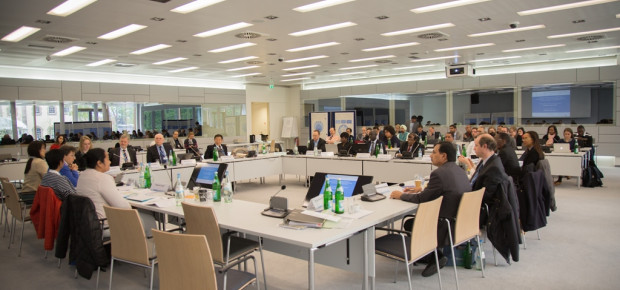
  • Side event on non-economic losses (18 May 2016, World Conference Centre Bonn): As part of the awareness raising of the nature and extent of non-economic losses, the Executive Committee organized the side event Shining the Light on Non-economic Losses Challenges, Risks and Lessons Learned for Addressing Them during the 44th session of the subsidiary bodies. The summary note of the side event can be found here. In the lead up to the side event, a photo campaign took place on 16-18 May 2016 for raising awareness of the issues related to non-economic losses, posing the question What do non-economic losses mean to you. A total of 65 people participated, representing a wide range of stakeholders from around the world (see image 1 and image 2).
  • SB60 side event - Learning from countries and communities responding to non-economic loss and damage: Implementation updates by the Warsaw International Mechanism for Loss and Damage Executive Committee, 4 June 2024: the Committee organized this event to facilitate the exchange of good practices for responding to non-economic losses. The discussions informed the preparation of the technical paper on non-economic losses, published in November 2024. The event brought together Parties, academics and other non-Party stakeholders to discuss approaches being taken by different countries to addressing non-economic losses, how the research community is assessing the cascading effects of loss of biodiversity and ecosystem services, the importance of leveraging the experience and skills of Indigenous communities for understanding the full extent and scale of losses, and how international policies relevant to loss and damage can be translated into local practices.
Expert-Group-on-Non-Economic-Losses
Do you want to find out more about approaches concerning non-economic losses?  
Explore the latest submissions to inform the development of the knowledge product by the NELs Expert Group. 


The work of the Expert Group on Non-Economic Losses  supports strategic workstream (b) of the five-year rolling workplan of the Warsaw International Mechanism  Executive Committee (WIM ExCom), which aims to enhance cooperation and facilitation in relation to non-economic losses.

The COP at its twentieth session in 2014, decided that the WIM ExCom may establish expert groups, subcommittees, panels, thematic advisory groups or task-focused ad hoc working groups to help execute the work of the ExCom in guiding the implementation of the Warsaw International Mechanism, as appropriate, in an advisory role, and that report to the ExCom (Decision 2/CP.20, para 8). ExCom 12 (2020) adopted the terms of reference for the Expert Group on Non-economic losses, and the group held its first meeting in 2021.

The NELs expert group is currently implementing its second Plan of Action (2025–2027), which was endorsed by the WIM ExCom at ExCom 23 (2025). This PoA identifies priority actions that support the implementation of the WIM ExCom’s work related to non-economic losses. Outputs under this PoA are intended to strengthen knowledge on NELs among policymakers and practitioners to better understand and assess non-economic losses on the ground, and to learn about available tools and approaches to respond to them.

The four desired impacts of the PoA are as follows: 

  1. Increased consideration of the cascading impacts of NELs in policymaking and planning processes;
  2. Enhanced engagement of the most vulnerable and marginalized communities affected by NELs;
  3. Increased awareness and understanding of NELs and effective ways to respond to them; and
  4. Increased coordination, coherence, and synergy across the work of the WIM ExCom.

The range of activities in the PoA includes:

  • Identifying knowledge needs and gaps related to responding to non-economic losses by conducting consultations with key stakeholders,
  • Developing tailored knowledge products to meet those needs, and
  • Carrying out awareness-raising initiatives for targeted audiences through the creation of accessible, user-friendly outputs.

The NELs expert group plans to involve Santiago network members and country representatives in carrying out some of these activities to ensure alignment with knowledge needs. The group will also collaborate with the Facilitative Working Group of Local Communities and Indigenous People Platform in undertaking its activities that engage Indigenous Peoples in the global narrative on non-economic losses.

priority-actions
Our loved ones who have passed away, when we bury them, we say ‘sili vakarua’ (‘bath twice’) because one is the bath before they are put in the coffin, and they bath again after they are buried as the waves come in and enter the new burial site. This is just traumatizing for us… – Resident of Togoru Settlement, Fiji

Climate change is not an abstract threat – it is a lived and accumulating trauma for communities around the world. Slow onset processes and extreme weather events are destroying homes and livelihoods, degrading ecosystems, severing relationships between people and nature, and obliterating cultural and natural heritage. From ancestral burial grounds and sacred sites to forests, glaciers, and coastal lands, climate impacts are eroding the cultural and ecological foundations that shape identity, knowledge, well-being, and resilience.

These are non-economic losses (NELs): profound, sometimes irreversible harms that are difficult to capture in monetary terms but that fundamentally affect people’s lives, their histories, and their futures. This brief extracts key insights from the WIM ExCom NELs technical paper1 to support stakeholders in recognizing and responding to these losses. It focuses on three interlinked areas – biodiversity and ecosystem services, territory and habitability, and cultural heritage – and outlines priority actions for urgent, equitable responses.


WIM Executive Committee. Non-Economic Losses: Featuring Loss of Territory and Habitability, Ecosystem Services and Biodiversity, and Cultural Heritage. Technical paper. UNFCCC, 2024.

Climate change is reshaping ecosystems, altering their composition, structure, and function. As biodiversity declines and ecosystems degrade, essential services such as food and freshwater provision, climate regulation, hazard mitigation, soil formation, and cultural meaning can become eroded. These losses can cascade across socio‑ecological systems: climate‑risk exposure rises, basic needs shrink, livelihoods falter, and health and well‑being deteriorate. As ecological foundations degrade, habitability declines, contributing to migration or relocation; opportunities for sustainable development narrow; and dignity and identity erode. In Saint Vincent and the Grenadines, flooding of arable land has destroyed food crops and market sales – a loss of provisioning services that has deepened food insecurity, reduced income, and diminished well‑being.

Sea‑level rise, desertification, glacial retreat, coastal erosion, and related hazards are driving the loss of land, both physically and in its ability to sustain life. Loss of territory refers to the disappearance of physical land from the jurisdiction and use of communities, while loss of habitability concerns land that remains but is less able to reliably support human life. These forms of loss affect well-being, identity, cultural heritage, social cohesion, and biodiversity and ecosystem services. In Bangladesh, rising tides, saline intrusion, and riverbank erosion have washed away homes and fields in some areas, contributing to landlessness, food insecurity, psychological distress, and the erosion of identity and belonging.

The erosion of cultural heritage in all its forms – from archaeological sites and architectural marvels to historic cities, cultural landscapes, artifacts, living heritage elements, and underwater heritage – is resulting in the loss of distinctive forms as well as accumulated knowledge, skills, livelihoods, governance systems, innovation, food and water security, and resilience. These losses often overlap and have impacts at various scales, from local communities to the global level, depending on the value of the heritage. In Cameroon, climate impacts threaten sacred sites along the Lobé River and the Nguon festival, ritual events whose loss could pose risks to community resilience, traditional governance, and the cultural fabric that binds communities across generations.

NELs rarely occur in isolation. Loss of ecosystems can reduce habitability, increasing pressures that may lead to relocation and sever cultural ties. The erosion of cultural heritage can undermine community capacity to steward ecosystems, accelerating environmental decline. These intertwined losses compound harm and deepen inequalities across generations. Effective responses must therefore be integrated, locally led, rights‑based, coherent across sectors and scales, and attuned to the complex ways climate change disrupts lives, landscapes, and legacies.

NELs are not peripheral. Recognizing and supporting responses to these losses is important for building resilience, advancing equity, and securing sustainable futures.

Eight Priority Actions for Addressing NELs
Woman pouring water

To address the cascading and interconnected NELs of biodiversity and ecosystem services, territory and habitability, and cultural heritage, priority actions should:

  • Integrate these dimensions into national, subnational, and local adaptation plans, disaster risk reduction strategies, and other policy areas and relevant legislation to ensure NELs are fully considered.
  • Ensure assessments reflect their ecological, social, and cultural significance, recognizing both their exposure to climate impacts and their critical role in supporting resilience.

Target audience:

🏛️ National, Subnational, Local Governments – policy, planning, land, environment, and cultural heritage authorities

💰 Donors and FRLD – funders shaping funding decisions, windows, and instruments

📊 Research Institutions – data, monitoring, and knowledge-system management

Woman speaking into a megaphone

To address the cascading and interconnected NELs of biodiversity and ecosystem services, territory and habitability, and cultural heritage, priority actions should:

  • Improve coordination across institutions, levels of government, and sectors to support responses to address interconnected losses.
  • Build multi-stakeholder partnerships involving governments, international agencies, Indigenous Peoples, local communities, and technical experts.

Target audience:

🏛️ National, Subnational, Local Governments – policy, planning, land, environment, and cultural heritage authorities

🌍 Implementing Agencies – entities delivering programmes and providing technical support

🧭 Indigenous Peoples & Local Communities – rights‑holders and knowledge-holders leading locally grounded responses

Man in a field

To address the cascading and interconnected NELs of biodiversity and ecosystem services, territory and habitability, and cultural heritage, priority actions should:

  • Prioritize approaches grounded in local values, knowledge systems, and lived realities.
  • Direct finance and support toward groups facing barriers to access, including women, youth, Indigenous Peoples, and those without formal land tenure.

Target audience:

💰 Donors and FRLD – funders shaping funding decisions, windows, and instruments

🧭 Indigenous Peoples & Local Communities – rights‑holders and knowledge-holders leading locally grounded responses

🌍 Implementing Agencies – entities delivering programmes and providing technical support

Family harvesting squash

To address the cascading and interconnected NELs of biodiversity and ecosystem services, territory and habitability, and cultural heritage, priority actions should:

  • Scale up culturally grounded, science‑based initiatives that restore ecosystems, sustain biodiversity, and support habitability to help avert and minimize NELs.
  • Embed these solutions in national policies and community‑led planning processes.

Target audience:

🏛️ National, Subnational, Local Governments – policy, planning, land, environment, and cultural heritage authorities

🌍 Implementing Agencies – entities delivering programmes and providing technical support

🧭 Indigenous Peoples & Local Communities – rights‑holders and knowledge-holders leading locally grounded responses

People on a boat

To address the cascading and interconnected NELs of biodiversity and ecosystem services, territory and habitability, and cultural heritage, priority actions should:

  • As a last resort where relocation is identified as necessary, ensure processes are community-driven, rights-based, and supported by sustained finance.
  • Draw on emerging frameworks, such as Fiji’s national framework for planned relocation, that integrate cultural, social, environmental, and technical considerations.

Target audience:

🏛️ National, Subnational, Local Governments – policy, planning, land, environment, and cultural heritage authorities

💰 Donors and FRLD – funders shaping funding decisions, windows, and instruments

🧭 Indigenous Peoples & Local Communities – rights‑holders and knowledge-holders leading locally grounded responses

Man smiling

To address the cascading and interconnected NELs of biodiversity and ecosystem services, territory and habitability, and cultural heritage, priority actions should:

  • Strengthen laws, governance arrangements, and management systems that protect tangible and intangible cultural heritage, recognizing that safeguarding cultural heritage is itself a component of climate action.
  • Support initiatives that inventory, document, safeguard, and transmit all forms of cultural heritage.

Target audience:

🏛️ National, Subnational, Local Governments – policy, planning, land, environment, and cultural heritage authorities

🧭 Indigenous Peoples & Local Communities – rights‑holders and knowledge-holders leading locally grounded responses

📊 Research Institutions – data, monitoring, and knowledge-system management

Man in a traditional tribal attire

To address the cascading and interconnected NELs of biodiversity and ecosystem services, territory and habitability, and cultural heritage, priority actions should:

  • Invest in ecosystem baselines, cultural heritage registries, and community‑defined indicators relevant to NELs, with continuous monitoring to identify emerging impacts.
  • Integrate scientific assessments with Indigenous knowledge systems and other place-based cultural knowledge.

Target audience:

📊 Research Institutions – data, monitoring, and knowledge-system management

🏛️ National, Subnational, Local Governments – policy, planning, land, environment, and cultural heritage authorities

🧭 Indigenous Peoples & Local Communities – rights‑holders and knowledge-holders leading locally grounded responses

Family at the shore

To address the cascading and interconnected NELs of biodiversity and ecosystem services, territory and habitability, and cultural heritage, priority actions should:

  • Strengthen capacities at all levels to assess, anticipate, and respond to NELs, including awareness-raising that reflects local perspectives recognizing all types of cultural heritage.
  • Support communities and institutions to integrate diverse knowledge systems and enhance preparedness, resilience, and cultural continuity.

Target audience:

🌍 Implementing Agencies – entities delivering programmes and providing technical support

🧭 Indigenous Peoples & Local Communities – rights‑holders and knowledge-holders leading locally grounded responses

📊 Research Institutions – data, monitoring, and knowledge-system management