Mandate
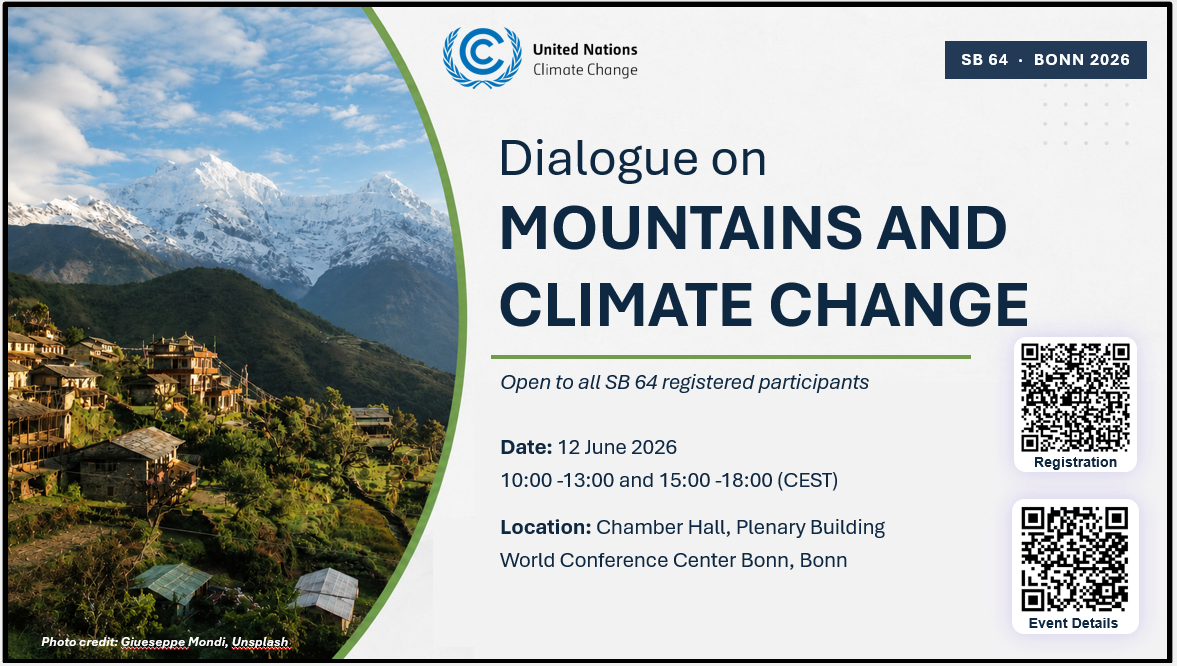
COP 30 requested the Chairs of the Subsidiary Body for Scientific and Technological Advice (SBSTA) and the Subsidiary Body for Implementation (SBI) to convene a dialogue on mountains and climate change, inter alia, the need to hold an annual dialogue on mountains and climate change, in conjunction with SB 64. Two co-facilitators appointed by the Chairs will facilitate the dialogue, with the support from the secretariat, and prepare a summary report on the dialogue, including on the outcomes of the discussions on the need to hold an annual dialogue on mountains and climate change. The Chairs will make an oral presentation on the summary report in their reports to COP 31 (see FCCC/CP/2025/12, paragraphs 39-45).
Co-facilitators
Mr. Sonam Tashi of Bhutan and Ms. Saskia Sanders of Switzerland have been appointed by SB Chairs as co-facilitators of the dialogue on mountains and climate change. The appointment has been made in accordance with COP conclusions (see FCCC/CP/2025/12, paragraph 41), which provide that the SB Chairs shall jointly appoint the co-facilitators, in consultation with Parties, ensuring representation from both developing and developed country Parties (see message sent to Parties and observers on the appointment of co-facilitators for the dialogue on mountain and climate change).
Concept note and agenda
The concept note and agenda for the dialogue is available here.
Objectives and expected outcomes of the dialogue
The dialogue will:
-
Share key learnings from practical experiences and identify support needs related to advancing climate action in mountains, including through National Adaptation Plans (NAPs), Nationally Determined Contributions (NDCs) and Biennial Transparency Reports (BTRs), across different regional and national contexts;
-
Identify and discuss entry points within relevant UNFCCC workstreams to address mountain-related risks, solutions and support needs, including possibilities for action and opportunities to strengthen coherence and implementation within current mandates;
-
Consider options for continued engagement on mountains and climate change under the UNFCCC, including the potential goals, opportunities and limitations of an annual dialogue.
The dialogue is expected to contribute to:
- Increased understanding of lessons learned from practical experiences and identification of support needs related to advancing climate action in mountains across different regional and national contexts, including through national instruments such as NDCs, NAPs and BTRs;
- Clearer identification of entry points within relevant UNFCCC workstreams and how these can address mountain-related risks, solutions and support needs, including opportunities to strengthen coherence and implementation within current mandates; and
- Improved understanding of options for continued engagement on mountains and climate change under the UNFCCC process, including the potential goals, opportunities and limitations of an annual dialogue.
Agenda
| Time (CET) |
Overview |
| Session 1: Opening and strategic framing (Plenary) |
| 10–10:30 |
Guiding question: Why do climate-related risks and solutions that advance climate action in mountains matter for the implementation of the Convention and the Paris Agreement, and why is this discussion timely within the international climate change space?
|
| Session 2: Key learnings from practical experiences and support needs related to advancing climate action in mountains, including through NAPs, NDCs and BTRs across different regions and contexts (Plenary) |
| 10:30–11:30 |
(Inputs from countries and experts, and plenary discussion)
Guiding questions:
What key learning and support needs have emerged from practical experiences in advancing climate action in mountains across different regions and contexts?
|
| Session 3: Entry points within relevant UNFCCC workstreams to address mountain-related risks, solutions and support needs, including possible need for action and opportunities to strengthen coherence and implementation within current mandates (Break-out groups and reporting back) |
| 11:30–13:00 |
(Overview presentation on the entry points within relevant UNFCCC mandates, break-out groups organized around topics/clusters and reporting back)
Guiding questions:
|
| 13:00–15:00 |
Lunch break |
| 15:00–15:45 |
Reporting back from break-out groups from Session 3 |
| Session 4: Options for continued engagement on mountains and climate change under the UNFCCC, including the potential goals, opportunities and limitations of an annual dialogue (Break-out groups and reporting back) |
| 15:45–17:30 |
Guiding questions:
Reporting back from break-out groups from Session 4
|
| Session 5: Synthesis of key messages and closing (Plenary) |
| 17:30–18:00 |
Guiding questions: What key messages and recommendations have emerged from the discussion? What considerations have emerged from the dialogue that could inform continued engagement on mountains and climate change under the UNFCCC process?
|