|
Context:
Climate change is increasingly resulting in irreversible changes and complex forms of loss and damage, including displacement, and economic and non-economic losses affecting culture, ecosystems and social well-being.
With the successful completion of the third review of the Warsaw International Mechanism for Loss and Damage associated with the Climate Change Impacts (WIM), the decision adopted at COP 30 reinforces WIM’s role in assisting developing countries navigate the growing realities of loss and damage. Through its thematic expert groups, the WIM Executive Committee has generated a growing body of knowledge on these issues. WIM's technical assistance facility, the Santiago Network, is in full operation with enhanced ability to scale delivery to support countries in averting, minimizing, and addressing loss and damage.
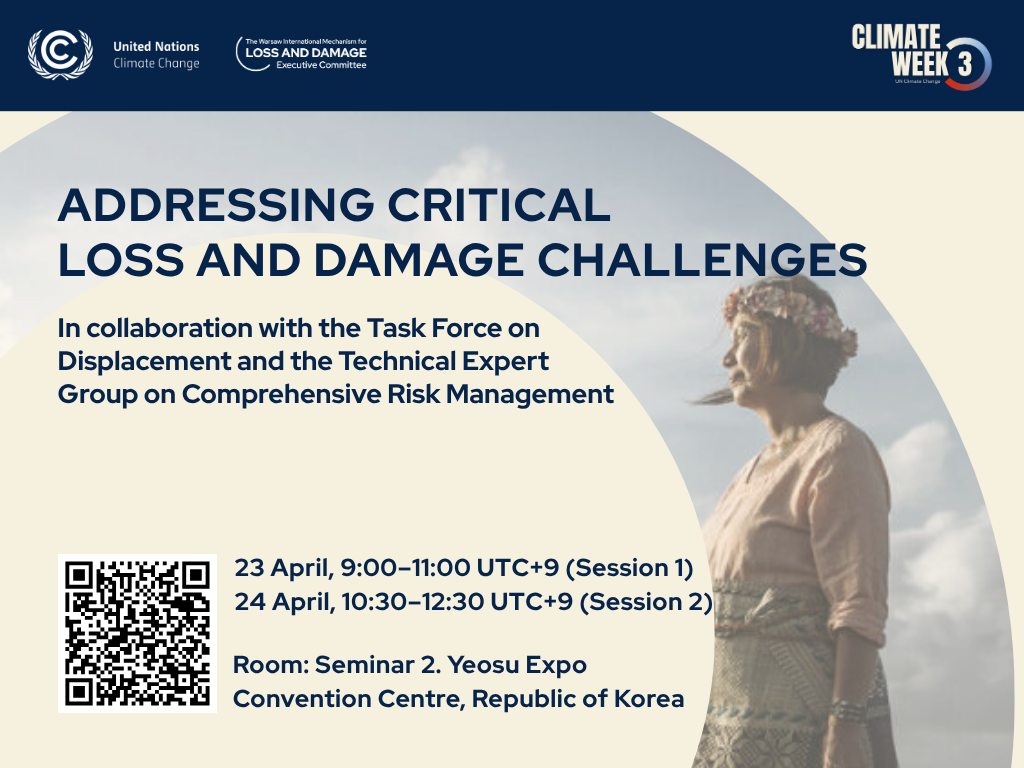
The event is in two sessions to allow engagement with a diverse range of policymakers, practitioners and institutions, working on the core areas of loss and damage, spanning from human mobility, non-economic and irreversible losses, comprehensive risk management and policy integration.
The two-part session is structured around a common thread: translating the growing body of knowledge on loss and damage into practical action at the regional, national and local level. Each session takes a focused, solutions-oriented approach to existing challenges – drawing on country experiences and showcasing ways in which the WIM can strengthen the practical application and accessibility of this knowledge to catalyse implementation support, technical expertise and support available under the WIM. Together, the sessions are designed to contribute to supporting broader efforts to enhance practical action on loss and damage, alongside informing technical guides and ‘How-to' series of knowledge products in the pipeline for publishing this year under the WIM Executive Committee.
|
Objectives:
Highlight practical challenges and emerging responses to key loss and damage issues across different regional, national and local contexts;
Accelerate the uptake and application of existing knowledge and solutions related to human mobility, comprehensive risk management and responses, and non-economic losses;
Strengthen awareness of implementation support, including those under the WIM and other institutions;
Facilitate dialogue between policymakers, practitioners and experts on practical pathways for addressing complex loss and damage challenges.
|