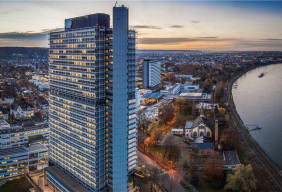
Credit: UN Climate Change
Capping off Q2, the June Climate Meetings (SB 64) in Bonn delivered mixed results and progress, making good headway on several key issues, but not adequately advancing other issues.
Parties took important positive steps towards operationalizing the just transition mechanism, helping to ensure that countries are better equipped to support people and communities through the transition to a more resilient future powered by renewable energy, while also setting in motion the review of the UAE Just Transition Work Programme.
Under Action for Climate Empowerment, Parties laid important foundations for strengthening public engagement in climate policy and action. The June Meetings also advanced work on implementing the outcomes of the first global stocktake.
Negotiations on climate finance, technology and capacity building – from the Adaptation Fund to the new host of the Climate Technology Centre – progressed alongside broader efforts to deliver on existing finance commitments.
Parties also made progress on improving the efficiency of the UNFCCC process through discussions under the agenda item on Arrangements for Intergovernmental Meetings.
However, Parties were unable to reach agreement on several key issues, including the Global Goal on Adaptation indicators and the review of the Mitigation Work Programme. These issues remain central to the implementation of the Paris Agreement, and the intersessional period will need to be used diligently to get back on track for COP 31.
Alongside the negotiations, work continued to strengthen the Global Climate Action Agenda, building on the six thematic axes launched at COP 30 which – importantly – aligned the Action Agenda with implementation of the outcomes of the first global stocktake. In Bonn, the COP 31 Presidency announced the priorities for the Action Agenda, including targets on electrification, resilient cities and waste, with the support of the Australian President of COP 31 Negotiations.
I am in lockstep with Minister Murat Kurum of Türkiye and Minister Chris Bowen of Australia: the negotiations and the Action Agenda are separate but parallel and complementary tracks. The negotiations deliver the international framework that enables action, while the Action Agenda helps to implement those decisions, through practical, scalable solutions. I commend Türkiye, working closely with Australia, for building on the strong foundations established at COP 30 and for maintaining this momentum.
Attention now turns to the months ahead. Following the Heads of Delegation meeting, which took place in Azerbaijan in July, it will be important to make strong progress at other key intersessional moments, including the next Climate Week – CW4 – also in Azerbaijan, and the pre-COP in early October in Fiji and Tuvalu. These will all be critical opportunities to narrow differences, strengthen cooperation and prepare for COP 31. In partnership with Türkiye and Australia, the pre-COP will also provide an important opportunity to bring Pacific Island perspectives to the fore.
We look forward to a productive Q3, building on progress made in Q2 across the full range of our mandated functions as convenor and custodian of the Paris Agreement and catalyst, in support of Parties and other stakeholders in our process. A summary of Q2 key activities is below.
Simon Stiell
Executive Secretary, UN Climate Change